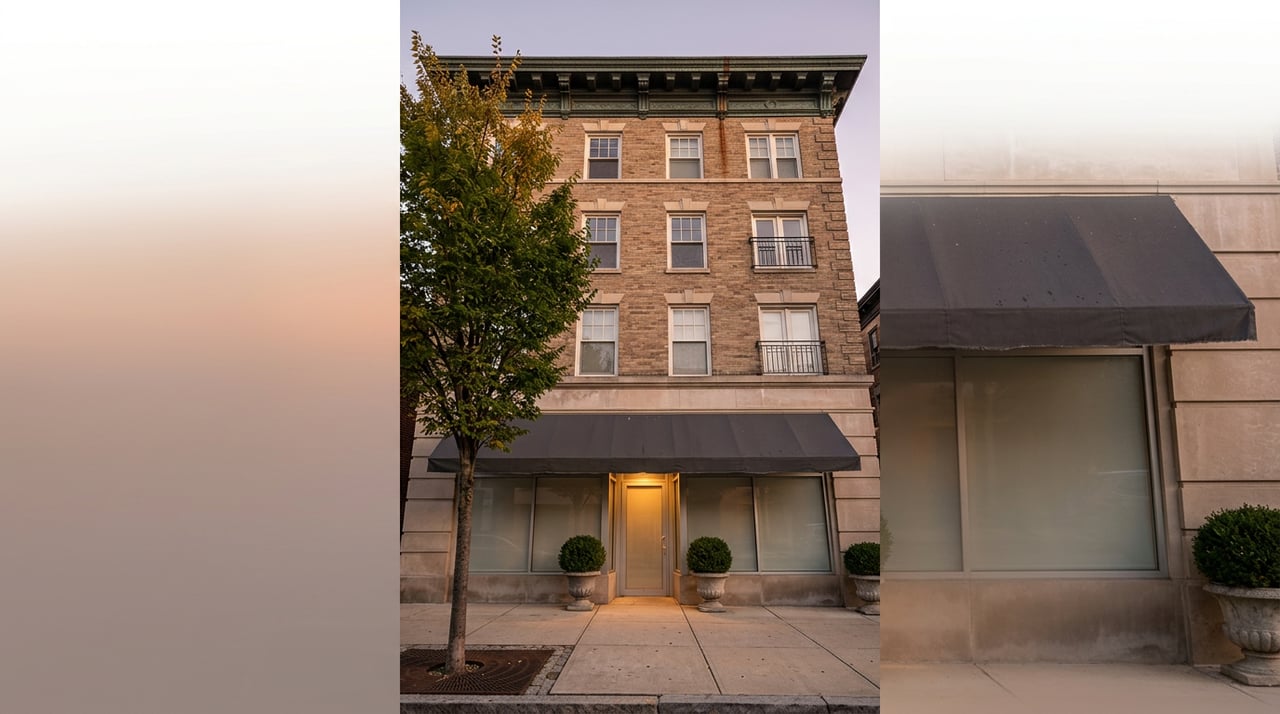
Ask someone who has lived in Murray Hill for a decade what's changed lately, and the honest answer is usually a shrug, until you start naming addresses. The corner of Third Avenue and 38th Street. The old Kajitsu space on 39th. The storefront that used to be Mazu Szechuan Cuisine. Say those out loud to a longtime resident and the shrug turns into a raised eyebrow, because those are three of the oldest, most fixed points on the neighborhood's mental map, and all three changed hands this year.
What's interesting isn't that Murray Hill got new restaurants. New restaurants open in every neighborhood, every year, without saying much of anything. What's interesting is the shape of what moved in. Every one of these swaps replaced a smaller, older operation with something built at a larger scale and a higher level of ambition. Nobody is subdividing these spaces into cheaper, smaller units. Somebody with real backing is taking the whole footprint and betting bigger.
Forty Years of Tex-Mex Just Became a 300-Seat Destination
For more than four decades, the corner of East 38th Street was El Rio Grande, the kind of Tex-Mex standby that becomes part of a neighborhood's furniture. On April 17, it reopened as The Consulate, a 300-plus-seat restaurant from twin brothers Kiril and Metodija Mihajlov that pairs French-meets-New American cooking with a seafood-heavy raw bar, steak frites, and a short rib cavatelli.
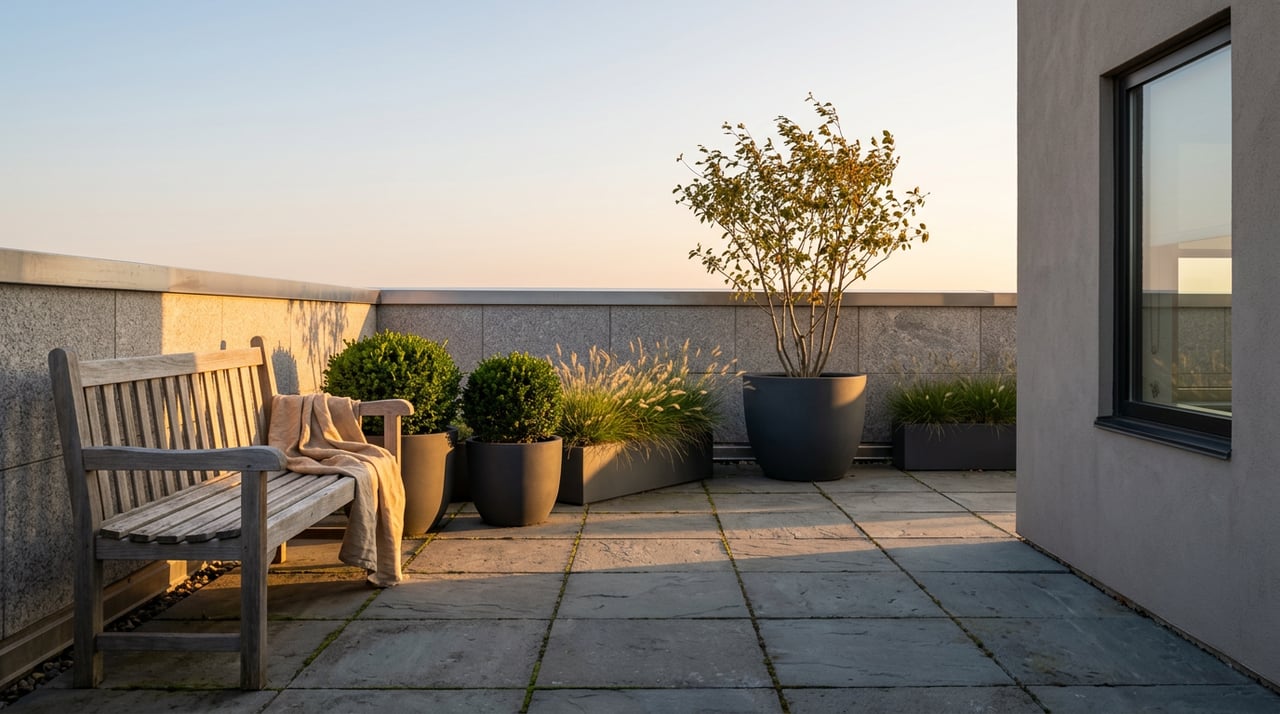
The number that matters here isn't the seat count. It's the terrace. The Consulate shares an outdoor setup with its sibling concept next door, with room for more than 200 guests between the two, and outdoor capacity at that scale is genuinely rare east of Park Avenue. Through September 1, the restaurant is running a Summer Prix Fixe across its Murray Hill, Midtown, and Upper West Side locations, which means the Murray Hill outpost is now the anchor of a multi-neighborhood group rather than a single standalone room.
A landlord choosing to hand a 40-year-old corner to a 300-seat, multi-location operation with a shared terrace is not a modest bet. It's a bet that Murray Hill can support destination dining that pulls people in from outside the immediate blocks, not just foot traffic from the apartments upstairs.
Two Blocks Over, a Quieter Room Got a Much Bigger Résumé
The former Kajitsu space at 125 East 39th Street didn't get bigger this year. It got more ambitious. In early May, chef Hasung Lee, previously the head chef at Atomix, one of the city's most acclaimed restaurants, opened his first solo project there: Oyatte, an eight-course tasting menu built around a single upstate source, Crown Daisy Farm, which supplies the restaurant's vegetables under a sustainability-focused partnership.
This is the same pattern as The Consulate, just at a different scale. A modest, quietly-run restaurant gave way not to something cheaper or more generic, but to a chef-driven concept with a real pedigree and a defined point of view about where its ingredients come from. Nobody split that space into two smaller units to lower the rent burden. Somebody bet on a single, tightly-run kitchen with a story worth telling.
The Smaller Swaps Say the Same Thing
Not every change on the ground floor comes with a terrace or a tasting menu, and the smaller moves are worth naming precisely because they follow the same logic at a lower price point.
Super Burrito filed a liquor license with Manhattan Community Board 6 for 495 Third Avenue, the address that used to house Mazu Szechuan Cuisine. It's the fourth New York City location for a group that started with a single spot in Rockaway Beach in 2017, founded by Eugene Cleghorn and Sam Neely, known for Mission-style burritos loaded with rice, beans, jack cheese, salsa, and meat. Third Avenue in this stretch has leaned heavily on chain fast-casual for years, and an independent burrito operation with three other city locations behind it is a specific kind of correction to that gap, not a downgrade and not another anonymous national chain.
A block or two away, Murray Cafe opened as an independent coffee and tea shop with a full daily brew program, giving the residential blocks a non-chain option where one had been thin on the ground for a while. It's the smallest of these four moves in terms of footprint, but the same principle holds: a full, considered concept moved into a space rather than a stripped-down convenience option.
What the Landlords Are Actually Betting On
Line these four up and the pattern stops looking like coincidence. A 40-year Tex-Mex spot became a 300-seat restaurant group's flagship terrace. A quiet omakase room became a chef's solo debut with a named farm partner. A shuttered Szechuan spot became an independent burrito chain's fourth outpost. A thin stretch of non-chain coffee got its own dedicated shop.
In every case, the landlord chose to re-tenant the entire space with one operator making a real commitment, rather than carving the square footage into smaller, cheaper units to spread the risk. That's a specific kind of confidence in the neighborhood's daytime and evening population, not a hedge against it. The result for anyone living in Murray Hill right now is fewer storefronts changing hands, but each one landing with more weight than the last.
The One Address That Hasn't Turned Over Since 1863
All of that turnover makes the one address that hasn't changed worth noticing even more.
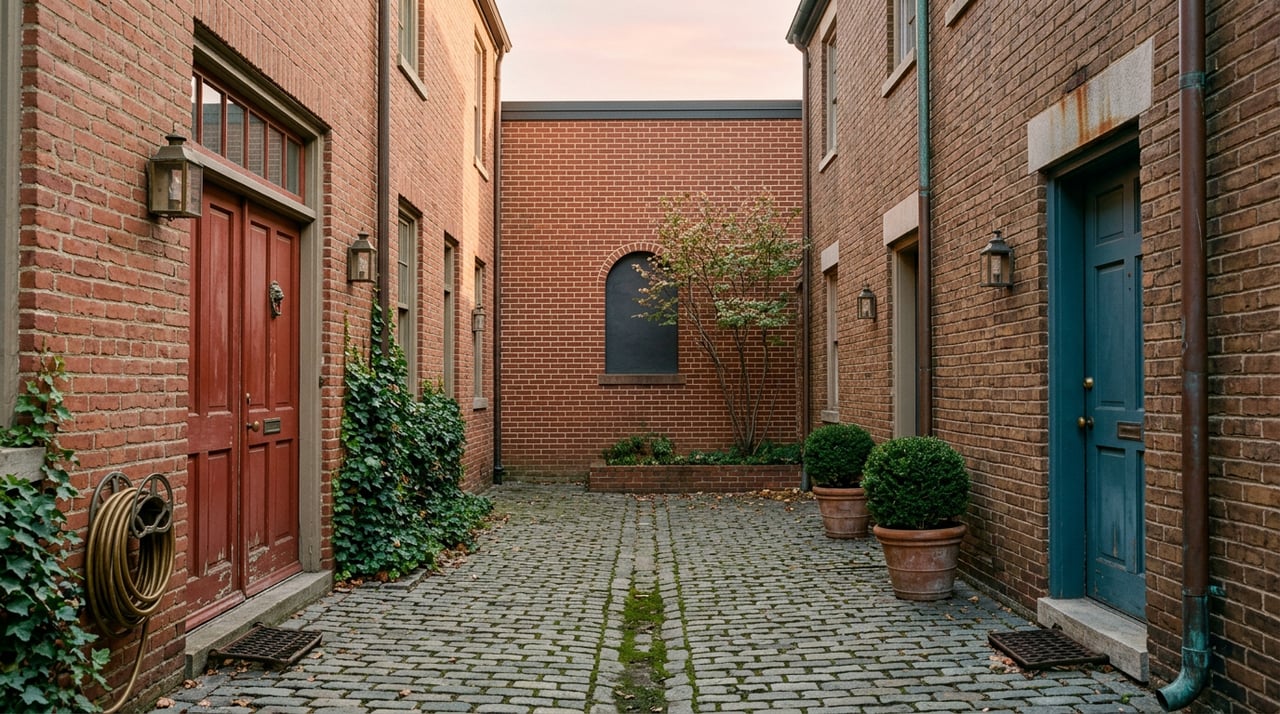
Sniffen Court, tucked off East 36th Street between Third and Lexington, is a row of ten brick carriage houses built between 1863 and 1864, likely by local architect John Sniffen, and it's listed on the National Register of Historic Places. Since 1884, one corner of it has belonged to the Amateur Comedy Club, the oldest continuously operating theatrical club of its kind in the country. The club converted two of the carriage houses into a working theater in 1918, and the space still holds its original Green Room and a set of liquor lockers dating to Prohibition.
Most people who live in Murray Hill walk past the mouth of that alley regularly and never see inside it. The club opens its doors for public tours only occasionally, and the most recent one ran August 1 and 2 of this year, organized with the AIA Center for Architecture. It is easy to miss and easy to forget about between tours, which is precisely why it's worth remembering it's there.
The contrast is the point. Murray Hill's storefronts are turning over into bigger, more ambitious versions of themselves this summer. Two blocks away, a mews built before the Civil War is still doing exactly what it's done since 1918. A neighborhood that can hold both of those things at once, rapid ground-floor reinvention and a 160-year-old private theater club still guarding its Prohibition-era liquor lockers, is telling you something real about its character, whether or not you were looking for it.
If you're already living this stretch of Murray Hill and want to talk through what any of this means for the block you're on, or you're weighing a move into or out of the neighborhood and want someone who tracks these changes as they happen, Royce Cara Berler is always glad to connect.