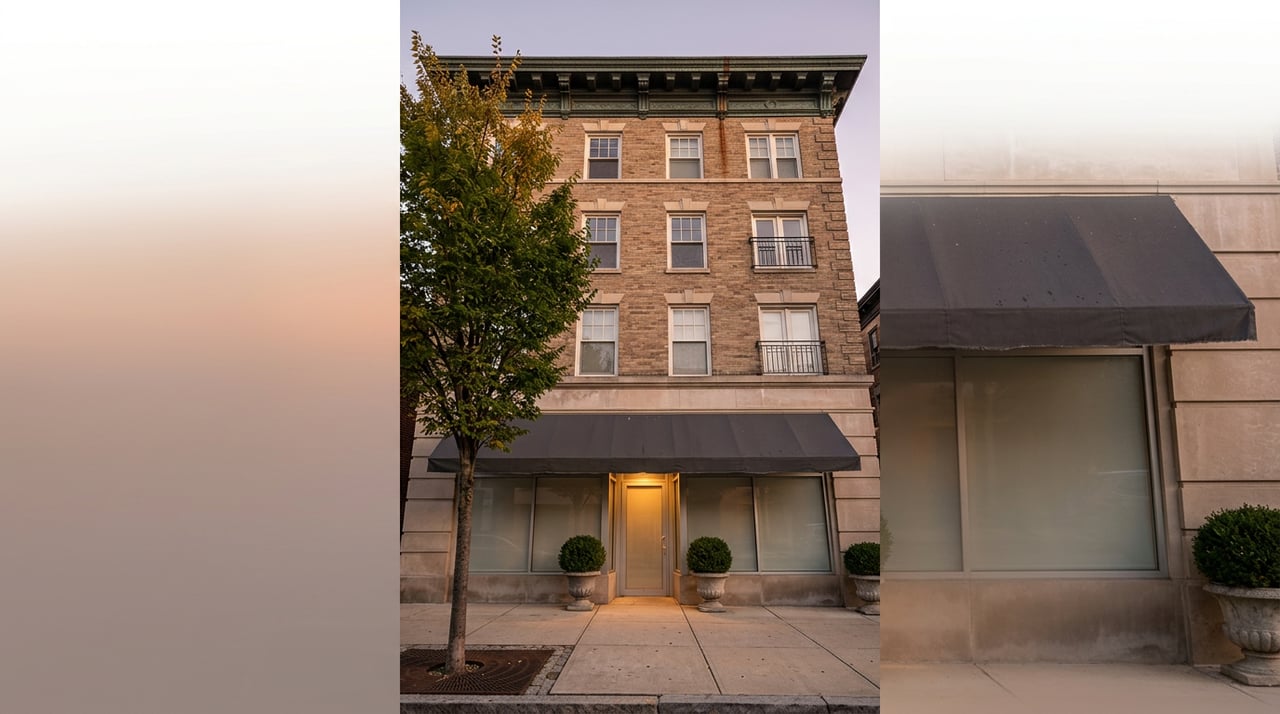
A buyer touring Midtown West this summer priced an offer off a nearby closed sale and got the number wrong by six figures. The comp was a condo on West 49th Street that closed in 2018. The unit under contract sat two blocks west, in a building that broke ground after Hudson Yards opened. Both listings say "Midtown West." Both would show up in the same StreetEasy comp search. They are not pricing against the same market, and treating them as if they are is the single most common mistake buyers make here right now.
That mistake is easy to make because the neighborhood's own median price invites it. One number gets quoted across every portal and every guide, and that number is doing something most readers never stop to question: it is averaging three markets that do not compete with each other for the same buyer, the same financing, or the same timeline.
One Median, Three Markets
Midtown West runs from roughly 34th Street to 59th Street, between Eighth Avenue and the Hudson River, though most people who live there still call the eastern half Hell's Kitchen and the newest slice Hudson Yards. Zoning drew the lines that created today's price split decades before anyone used either name commercially. West of Eighth Avenue and north of 43rd Street, city rules have long capped most buildings at six stories, which is why so much of the interior blocks are still walk-up co-ops from the early twentieth century rather than towers.
That zoning history shows up directly in the pricing data. As of May 2026, active inventory across Midtown West stood at 426 listings, 83 of them new development, with a median asking price near $1.25 million, down 3.5 percent year over year even as total inventory rose 7.4 percent. Sitting inside that composite number, co-op prices in the same May 2026 snapshot were closer to $530,000, up 4.7 percent year over year, moving in the opposite direction from the blended figure built around it.
Here is what that split looks like broken apart:
| Sub-market | Typical building | Price signal | What limits it |
|---|---|---|---|
| Hell's Kitchen walk-up co-ops | 4 to 6 stories, often no elevator | Co-op median near $530,000 (May 2026), up 4.7% YoY | Small units, older mechanical systems, slower appreciation |
| 1980s-vintage stock, Ninth to Eleventh Avenue | Mid-rise co-ops and condos | Most negotiating room in the current market | Dated finishes, mixed amenity packages |
| Hudson Yards towers | Full-service, supertall condominium | $2,500 or more per square foot at the top of the range | Full common-charge and property-tax carrying cost |
A single "Midtown West is up" or "Midtown West is down" headline can be technically accurate and still describe none of these three markets correctly for the buyer standing in front of a specific building.
Why the Falling Median Isn't the Discount It Looks Like
The instinct, once you see a median asking price down 3.5 percent alongside inventory up 7.4 percent, is to call this a buyer's market and start writing lowball offers. The transaction data complicates that story. In the first quarter of 2026, condo sales volume fell 31.8 percent year over year and co-op volume fell 37.5 percent, with overall Midtown contract activity running roughly 21 percent below the same period in 2025. Fewer deals are closing, which means the median is being set by a thinner trade base than the headline suggests.
Redfin's rolling three-month window ending in May 2026 tells a related story. Median sale price came in at $1.0 million, up 2.5 percent year over year, with price per square foot at $1,360, up 5.2 percent. Days on market crept up to 79 from 74 a year earlier, and only 78 homes sold in May 2026 compared with 101 in May 2025. Prices are not collapsing. Volume is.
The reason volume is thinning has less to do with buyer hesitation than with what resale sellers are competing against. This is where the largest new supply is landing. The West, a new condominium at 547 West 47th Street, has been marketing a 10 percent deposit at contract signing this year, a sponsor incentive that resale sellers cannot match without cutting price. A few blocks over, Bloom on 45th has been closing units and Linden Lane at 349 West 51st Street entered pre-marketing this summer. Homes.com counted 232 active condo listings across Hell's Kitchen in June 2026 alone, with asking prices ranging from $299,000 to $80 million, a spread wide enough that the word "median" barely holds meaning across it.
The pipeline behind those active listings is still growing. In July 2026, New York State selected a development team including the Gotham Organization, Fisher Brothers, and MURAL Real Estate Group to redevelop a state-owned lot across from the Intrepid Museum into what is being called Hudson Landing, the single largest piece of new supply now working through the district. Separately, Silverstein Properties is bidding for one of three downstate casino licenses regulators are expected to award by the end of the year. If that bid succeeds, a companion agreement with Metro Loft would add more than 2,000 conversion units to the district, including more than 500 permanently affordable homes. If it fails, that portion of the pipeline resets entirely, and every absorption estimate built on it resets with it.
Smaller sites are moving too. In late March 2026, Prospect Development Group filed permits for a 34-story tower at 460 Tenth Avenue, one of the last major undeveloped parcels at Hudson Yards, calling for 456 apartments. The site's previous owner had proposed a smaller 233-unit condominium before listing the parcel for sale in November 2025.
None of this means resale sellers are doomed to sit. It means a falling median in this specific neighborhood is not a discount waiting to be captured. It is the sound of resale inventory competing against sponsor pricing, sponsor concessions, and sponsor marketing budgets, and the negotiation that actually works depends entirely on which of the three sub-markets your target building sits in.
What a Buyer Should Actually Ask
Before writing an offer on a resale unit in this neighborhood, it is worth getting answers to a short list of questions that a single median price will never surface:
- What incentives are the two or three closest new-development buildings currently offering, and how would matching them reprice this resale unit?
- Does the offering plan or resale board package disclose any Local Law compliance assessments coming due in the next three years?
- Is the seller pricing against last year's comparable sale, or against homes that have actually closed in the past 90 days?
- If this is a sponsor unit, what does skipping board approval cost in transfer taxes, and has an attorney reviewed the offering plan amendment?
That last question deserves its own explanation, because it changes both the timeline and the math.
The Board Package vs. the Sponsor Unit
Across Manhattan, one 2026 market summary put co-op closings at 90 to 120 days on average because of the board timeline that follows an accepted offer, financial statements, reference letters, and an interview, well behind the 30 to 45 days a correctly priced condo can take in a strong location. In the small five- and six-story walk-ups that make up much of Hell's Kitchen's older stock, that traditional board process is still the norm, and it is one reason resale sellers in that segment have less room to negotiate on timeline even when they have room to negotiate on price.
A sponsor unit skips that process entirely. Because the sale runs through an Attorney General-accepted offering plan rather than a board vote, closings can move faster and some sponsors accept 10 percent down in buildings where a resale board in the same address might require 20 to 25 percent. The tradeoff usually shows up in the contract rather than the price: buyers typically absorb both the New York State and New York City transfer taxes, a cost normally carried by the seller, adding roughly 1.825 to 2.075 percent to the total transaction. Sponsor units also may not have been renovated, and disclosure standards differ from a standard resale, which is why having an attorney review the offering plan amendment before signing matters more here than almost anywhere else in the deal.
Quick Answers
Why do different portals show different median prices for the same neighborhood? Each pulls from a different data feed and a different date window, and in a neighborhood where prewar walk-ups, 1980s stock, and new Hudson Yards towers all sell in the same zip codes, the mix of what closed in any given window moves the median more than actual price change does.
If the median is falling, is this a good time to buy in Midtown West? The answer depends more on product type than on timing. Resale inventory in older buildings currently has real negotiating room. New development, particularly on the far west blocks closest to the river, does not, because sponsors are pricing against construction loans and offering-plan schedules rather than local comparable sales.
If you are weighing a walk-up co-op against a Hudson Yards tower, or trying to figure out whether a listing's asking price reflects the building's real market or last year's comparable sale, that is exactly the kind of building-by-building read a portal median cannot give you. Royce Cara Berler has spent years pricing and negotiating across every one of these Midtown West sub-markets and can tell you, block by block, which number actually applies to the apartment you are looking at. Let's Connect.