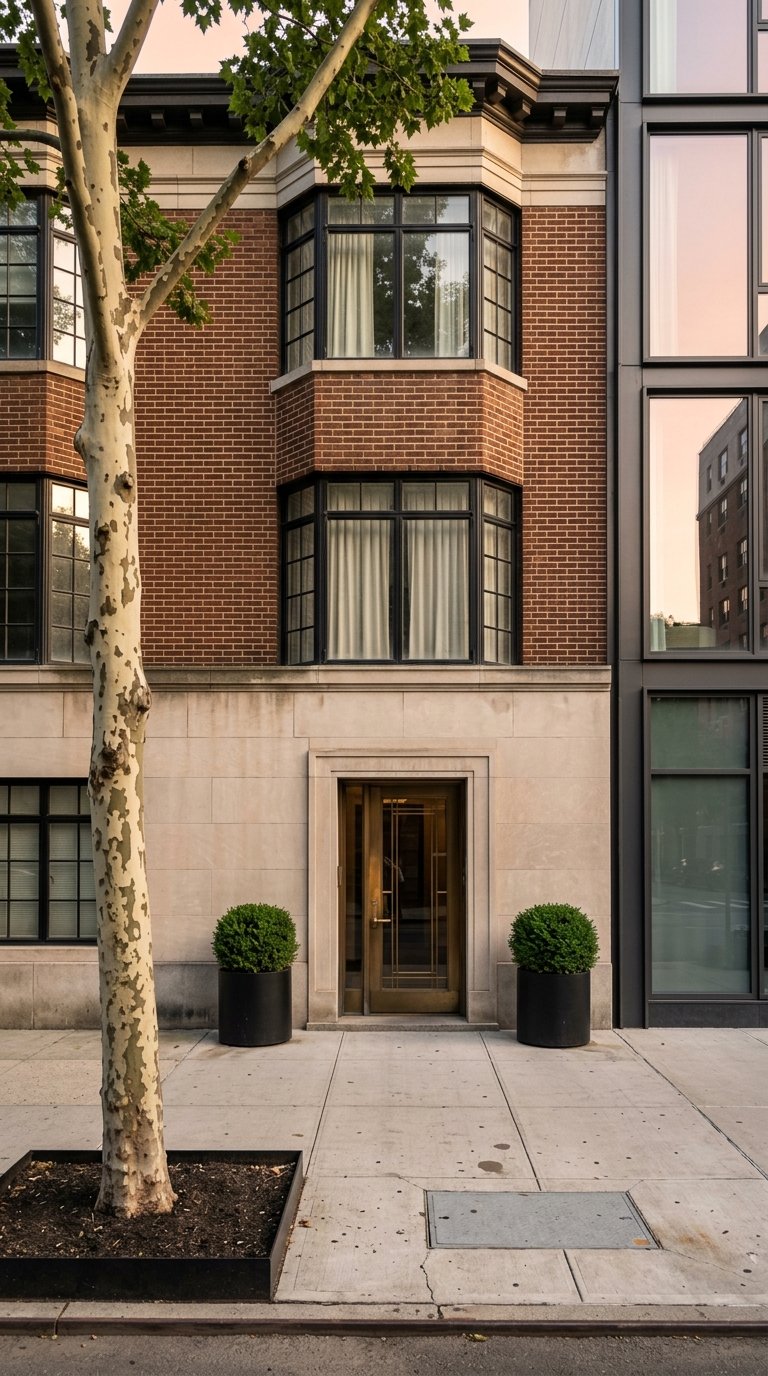
If you are trying to understand Lenox Hill, the first thing to know is simple: you are not looking at a separate market from the Upper East Side so much as one of its most premium sections. That can make pricing, comparisons, and expectations harder to read, especially when one source is looking at Lenox Hill, another is looking at ZIP code 10021, and another is measuring the broader Upper East Side. This guide will help you see where Lenox Hill fits, what makes it different, and what that means if you plan to buy or sell there. Let’s dive in.
Lenox Hill’s Place in the Upper East Side
Lenox Hill is best understood as part of the Upper East Side, not a standalone city-defined market. New York City Council District 5 includes Lenox Hill within the Upper East Side alongside Yorkville, Carnegie Hill, and Roosevelt Island. New York City Planning also groups the area within broader statistical neighborhood tabulation areas rather than drawing exact neighborhood borders.
That distinction matters because market numbers can shift depending on what geography a source is measuring. A ZIP code, a neighborhood label, and a broader Upper East Side data set will not always tell the same story. In practice, Lenox Hill sits inside the Upper East Side market, but it often behaves like one of its most expensive slices.
Why 10021 and Lenox Hill Are Not the Same
ZIP code 10021 covers more than Lenox Hill alone. That broader ZIP-level view includes a more varied mix of housing and price points, which tends to pull the numbers down compared with Lenox Hill’s premium core.
Recent figures show the difference clearly. Realtor.com reports a median listing price of $1.575 million for ZIP 10021, while Lenox Hill’s median listing price is $3.395 million. Median rent also shows a wide gap, with 10021 at $5,000 per month and Lenox Hill at $8,250 per month.
For you as a buyer or seller, that means ZIP code data can be useful, but it should not be treated as a perfect stand-in for Lenox Hill. If you price a Lenox Hill apartment off a broader ZIP average, you may miss the mark. If you shop only by ZIP-level numbers, you may underestimate how much variation exists inside the same postal area.
Lenox Hill Pricing Compared With the Upper East Side
By almost every broad comparison, Lenox Hill sits above the larger Upper East Side market. Realtor.com shows a median listing price of $3.395 million in Lenox Hill, compared with $1.695 million for the broader Upper East Side and $1.4 million for Manhattan overall.
Price per square foot tells a similar story. Lenox Hill is reported at $1,762 per square foot, while the broader Upper East Side is $1,399, Yorkville is $1,184, and Carnegie Hill is $1,438. This helps explain why Lenox Hill is often viewed as an upper-tier Upper East Side market rather than a value-oriented entry point.
Sale-side data also supports that positioning. Redfin’s March 2026 snapshot shows a median sale price of $2.4 million in Lenox Hill, with homes spending about 88 days on market and selling at 99.2% of list price. Realtor.com separately classifies Lenox Hill as a buyer’s market, which suggests that while the neighborhood commands premium pricing, buyers still have room to compare options carefully.
How Lenox Hill Compares With Nearby Areas
If you are deciding where Lenox Hill fits among nearby Upper East Side sections, the clearest takeaway is that it usually reads as the premium core. Yorkville is the most obvious lower-priced comparison. Realtor.com reports a median listing price of $1.08 million there, far below Lenox Hill’s $3.395 million.
Carnegie Hill is a closer peer in prestige, but current numbers still place Lenox Hill higher on asking prices and rents. Redfin pegs Carnegie Hill’s median sale price at $2.3 million, which is close to Lenox Hill’s $2.4 million sale price, but Lenox Hill’s listing and rent metrics still come in stronger in the available data.
This is why neighborhood labels on the Upper East Side need context. Two apartments may both be marketed as Upper East Side homes, but their pricing strategy can look very different depending on whether they are in Lenox Hill, Yorkville, or Carnegie Hill.
What Buyers Should Know About Lenox Hill Inventory
Lenox Hill is not a one-note market. StreetEasy shows a wide mix of property types, including co-ops, condos, houses, condops, and new development. That variety is part of what makes the neighborhood appealing, but it also means you need to compare homes carefully instead of relying on one broad price point.
StreetEasy currently shows 829 for-sale listings in Lenox Hill, with about 496 co-ops, 297 condos, and 35 houses. That works out to roughly 60% co-ops, 36% condos, and 4% houses. In other words, co-ops still define much of the market, but condos represent a meaningful share, and there is also a smaller house and townhouse segment.
The price ladder is wide. Current listing examples range from studios and one-bedrooms under $700,000 to roughly $1.6 million two-bedroom condos, while luxury new-development condos can reach from $13.25 million to $23.75 million. Townhouses and houses can extend even further into the eight-figure range.
For buyers, that means Lenox Hill can offer both classic Upper East Side apartments and trophy-level homes under the same neighborhood name. The right comparison set depends on building type, condition, layout, and exact location within the neighborhood.
Why Location Inside Lenox Hill Matters
Even inside Lenox Hill, pricing is not uniform. StreetEasy notes that Fifth Avenue and Park Avenue addresses are among the most expensive in the city. Farther from the park, prices can become more moderate, especially for co-ops and rentals.
This internal pricing spread matters when you are evaluating value. Two apartments with similar square footage may trade at very different prices because of avenue, building class, exposure, amenities, or renovation level. In a neighborhood like Lenox Hill, the micro-location is often just as important as the neighborhood label.
For sellers, this is where a valuation-driven approach becomes essential. Broad neighborhood averages are useful for context, but the strongest pricing strategy usually starts with the building, the line, the condition, and the most relevant nearby comps.
The Rental Market Is Smaller and More Selective
Lenox Hill’s rental market appears thinner than the broader Upper East Side’s. Realtor.com shows 81 rental listings in Lenox Hill versus 761 across the larger Upper East Side. That does not mean rentals are unavailable, but it does suggest a more limited pool within this premium pocket.
The rent gap is also notable. Lenox Hill’s median rent is reported at $8,250 per month, compared with $4,940 for the broader Upper East Side and $5,095 for Manhattan overall. If you are searching for a rental, relocation home, or pied-a-terre option, that smaller supply can shape both your timeline and your budget.
What Supports Lenox Hill’s Long-Term Appeal
Lenox Hill’s appeal is not only about pricing. The neighborhood benefits from the larger Upper East Side’s built-out, transit-rich, amenity-dense environment. StreetEasy highlights access to Central Park destinations, Museum Mile, restaurants, coffee shops, grocery stores, libraries, and cultural institutions across the area.
Transit is another major factor. East side service includes the 4, 5, and 6 trains at 59th and 86th Streets, along with the Q at 72nd and 86th Streets. The Second Avenue Subway Phase 1 expansion added the Q stations at 72nd and 86th Streets and improved commuting options for area residents.
For buyers and sellers alike, these fundamentals help explain why Lenox Hill continues to command a premium. It offers a combination of established housing stock, strong connectivity, and daily convenience that tends to support long-term demand.
What This Means If You’re Buying
If you are buying in Lenox Hill, it helps to think in layers. Start with the neighborhood’s place in the Upper East Side, then narrow your search by building type, exact location, and your intended use. A co-op, condo, condop, or townhouse can each behave differently in both price and process.
You will also want to compare Lenox Hill against nearby options rather than assuming every Upper East Side address competes equally. In some cases, Yorkville or other nearby sections may offer more space or a different product mix at a lower price point. In others, Lenox Hill may justify its premium because of building quality, avenue placement, or inventory type.
What This Means If You’re Selling
If you are selling in Lenox Hill, the market’s premium position can be an advantage, but only if pricing is grounded in the right comparisons. A seller should not rely only on broad Upper East Side averages or ZIP-level figures. The better approach is to focus on the specific segment your property actually competes in.
That means looking closely at factors like co-op versus condo status, building reputation, location within Lenox Hill, level of renovation, and how current inventory is positioned. In a market with both conventional apartments and high-end luxury listings, clear positioning matters. The goal is not just to list at a high number, but to align with the right buyer expectations from day one.
If you want help understanding how Lenox Hill fits into your next move, Royce Cara Berler offers strategic guidance for Manhattan buyers, sellers, renters, and clients who need a smart, valuation-driven plan.
FAQs
Is Lenox Hill considered separate from the Upper East Side?
- No. Lenox Hill is generally treated as a section of the Upper East Side, though market data may be reported separately depending on the source.
How does Lenox Hill pricing compare with the broader Upper East Side?
- Lenox Hill is materially more expensive in current data, with a median listing price of $3.395 million versus $1.695 million for the broader Upper East Side.
Does ZIP code 10021 reflect Lenox Hill alone?
- No. ZIP code 10021 covers a broader area, so its pricing and rent figures are lower and more mixed than Lenox Hill’s premium core.
What kinds of homes are common in Lenox Hill?
- Lenox Hill has a mixed housing stock that includes many co-ops, a significant number of condos, a smaller house segment, plus condops and new development.
Is Lenox Hill mainly a sales market or a rental market?
- It includes both, but the rental inventory is much thinner than the broader Upper East Side, with 81 rental listings reported in Lenox Hill versus 761 across the larger area.
What should sellers focus on when pricing a Lenox Hill home?
- Sellers should focus on building type, exact location, condition, and the most relevant local comps rather than relying only on broad Upper East Side or ZIP-level averages.